Social
People within the ESA and their stories
People share their stories and experiences of working within the sealing industry and the ESA.
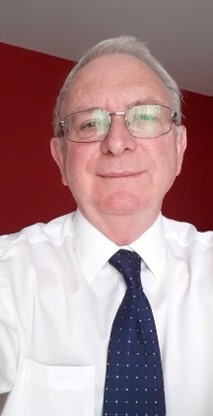
Peter Bowden
The background
It would be easy to jump straight to my career in sealing, but sometimes a little preamble can say a lot, maybe it will resonate with you, the reader.
I am old enough to have gone through the 11 plus and onto grammar school, not one of my life’s successes. I didn’t have a clear direction for where I expected my career to develop, but a terrible memory closed down many avenues, while a brain that could resolve problems meant I was stronger in maths and physics (and fixing things). In 1969, at the age of 16, I escaped school to begin life as an apprentice with British Rail, travelling from my home near Manchester to Crewe every day until day release at Stockport College spared me one early rise. After a year I continued my apprenticeship in Manchester and continued college.
5 years after starting work I was a time served mechanical and electrical fitter, but I knew a life that included lifting cast iron brake blocks while dodging oil and worse dripping from above was not my future. A further 4 years saw me graduate in mechanical engineering and, as BR started one of their regular restructures, I left them and entered the world of mechanical seals.
What is a mechanical seal?
My first interview with Flexibox Ltd didn’t start well, I had been sent by an agency for a sales job but the sales manager had as little interest in me being in his team as I did in sales. Fortunately, an interview with the engineering manager was hastily arranged and a few weeks later I joined as a Research and Development Engineer, still not really knowing what a mechanical seal was.
The team mostly comprised engineering graduates straight out of university, so when the test laboratory manager left six months later, I was asked to stand in. Six months later I was offered the role full time but declined, I could see it wasn’t for me. After four years in R&D, plus a further year designing special seals, I ventured into a more commercial world as International Projects Co-ordinator. What a change, from a role working on, relatively, long term projects I stepped into a world of international liaison, with people needing answers in hours not weeks.
Then followed a period of ‘contracts problem resolver’, essentially making peace with customers whose orders had been badly delayed. This was one of the most satisfying jobs I had, taking a serious commercial issue, then finding a quick and satisfactory solution. It is reputation forming.
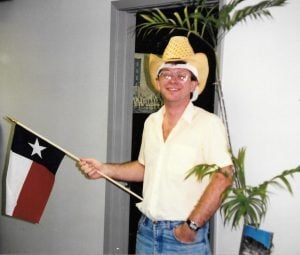
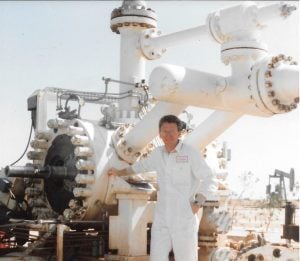
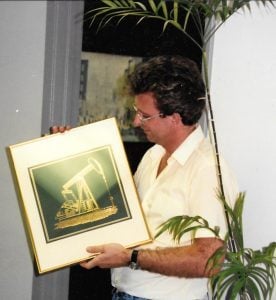
Ten years into my time with Flexibox, I was asked to cover for a colleague who was going on secondment to our office in Japan, as he returned to the UK, I went on secondment to Houston to manage design of a new product and support business development. Many more days and weeks in Texas resulted from a legislative drive to reduce emissions from process plants and I spent four years as Market Development Manager, managing the ‘zero emissions sealing’ project and providing technical and marketing management for special projects and business developments. Business trips to the USA, Scandinavia, Europe, and sometimes beyond, become more and more frequent.
At this point life took a big turn as the company was taken over by John Crane, my next six years was spent, initially, supporting integration of two similar product ranges and then managing a team producing technical and marketing information.
Time never stood still for long and a few years later my role extended to include managing a specialist team providing new and innovative seal solutions, managing test facilities across multiple sites and managing the Regional Liaison programme – providing head office support to offices in other countries. For me it required a lot of work in Finland, and in later years Sweden and Australia.
A short stint as New Product Development Manager followed before I ‘engineered’ a return to a combined engineering and marketing role as Global Product Manager. This involved seal lifecycle management and leading cross functional teams, ensuring a complete support package for all of our companies in the UK and abroad. At this time, I also became involved in update of the API (American Petroleum Institute) seal standard 682 and spent time training John Crane employees in the standard. Global training and presenting technical papers at international conferences was an ongoing theme through much of my career. Business trips extended from the USA and Europe across to Singapore, China and other Asian locations.
In 2015 I retired but, three years later, accepted the part time role as Technical Director with the ESA. In this role I provide technical support to member companies and compile ‘organisation neutral’ documentation for use by all. Company neutral support is particularly important when it is related to legislation and standards compliance, I find this aspect comes naturally because, while in my full-time career, my roles were almost always international. For me, providing support to colleagues, whether technical or marketing, is what I enjoy most and nothing beats a sincere thank you from them.
From leaving school with a minimum of ‘o’ levels I retired as a Fellow of the Institute of Mechanical engineers and with great memories of meeting and working with people across all continents.
If there are takeaways from all of this, I would say they are:
- Never stop believing in your future, even if it doesn’t seem to be heading where you want it to.
- Never think that just because you are qualified in one area of business you can’t succeed in other departments.
- Don’t imagine that just because a product doesn’t sound exciting that it won’t provide you with a great career. Life is what you make it. Welcome to the world of seals – whatever they are.
Peter Bowden, ESA
Ralf Vogel
Involvement with the sealing industry and ESA
After my graduation as a mechanical engineer, I started working as an R&D engineer in the steel industry. My involvement with the sealing industry started 27 years ago when I accepted an R&D position with Merkel (later to become Burgmann Packing). I received good training by learning from experienced colleagues. My early involvement with the ESA helped me to get a better insight into issues such as legislation and standards. Also, working together with other sealing experts helped me to gain a wider knowledge about different aspects of the industry.
After my training I moved the R&D facilities for packings to our manufacturing plant in Ireland. Despite being one of the oldest types of sealing devices, packings are a complex product. As a mechanical engineer I had to learn about different types of yarn materials, chemicals for the impregnations and the different complex steps of manufacturing the product.
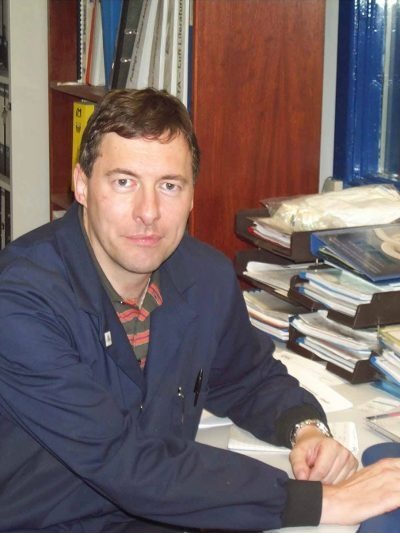
In addition to the development side, I got involved with application engineering by supporting technical sales engineers worldwide when encountering difficulties or failures with end users. This provided knowledgeable input for new product development. The spectrum of applications is very wide. Dealing with rotary pumps with low pressures but higher shaft speeds to industrial plunger pumps with more than 3000 bar discharge pressures. Temperatures for sealing liquid nitrogen at -196 °C up to more than 1000 °C for static sealing of steel furnaces. In addition, there is a vast range of media from harmless fluids such as water to concentrated acids or alkaline solutions.
Besides the wide application range, other aspects such as environmental laws and standards, health & safety aspects and industry specific requirements made the development work interesting and challenging. Over the years in the industry, working with competitors and other experts in the ESA helped me to gain a better understanding of all these subjects. With the ESA we were able to do work which individual companies on their own cannot do, such as the development of EN standard 16752 for pump packing testing or joint research projects like the friction study for pump packing applications.
This experience enabled me to take on the role of Technical Director for the ESA when the position came up. Again, it is challenging to evolve the organisation and support all the sealing Divisions in their work. The coronavirus situation and the associated restrictions have also made it very difficult but we were able to set-up regular online meetings and continue with the project work. The development of training material, handbooks in different languages and information about standards and legislation issues has continued. Setting up the Knowledge Base as an information database for anyone interested to learn about sealing devices is another step forward for the ESA. The Knowledge Base enables us to share the vast knowledge of all ESA members to help the sealing industry and their customers to develop in the future.
Ralf Vogel, ESA
David Edwin-Scott
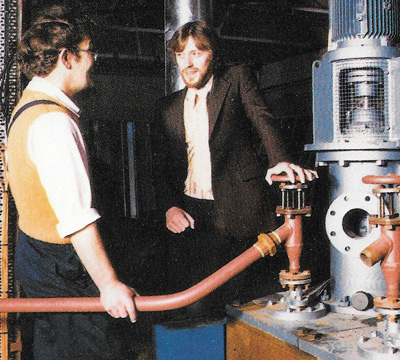
David is the Technical Director of the Elastomeric & Polymeric Seals Division and the Packings Division within the ESA. His history of working with Sealing Devices is covered by an article written by himself for our news letter entitled the Accidental Sealing Engineer. His knowledge and experience is incredible yet he started off not knowing what to expect. Having travelled the world and enjoyed so many life changing experiences within this industry perhaps you might also want to follow in his footsteps…
The accidental sealing engineer
When I graduated from university in 1974 the last business I expected to spend over 40 years enjoying was that of sealing technology. With a degree in Chemical Engineering I was all set for a glittering career designing chemical plants with one of those big prestigious petrochemical companies. But in those days engineering graduates were plentiful and competition for places was extremely fierce.
So I took a ‘temporary’ role in production development with a sealing device manufacturer and I am so glad that I did. First of all the production techniques are so numerous and varied that I was quickly exposed to plant and procedures that were completely new to me. Elastomer compounding and moulding, calendaring of fibre jointing, plaiting and braiding of yarns for compression packings, water jet and laser cutting and many others present their own fascination for the engineer.
But it was when I moved on to the sharp end of application engineering that I was truly hooked. The point is that every industry relies on seals and so the depth and variety of challenges the seal designer faces are extensive. And because the customer base is so wide, when one industry is going through a quiet phase, others will be booming so there is always work to be had.
My first specialisation was in the Oil & Gas Exploration & Production industry during the rapid expansion in the North Sea, working closely with major equipment manufacturers to develop well-head sealing solutions to deal with the demanding operating conditions. Later on I began to get involved with renewable energy applications in both wind-power and hydro-electric turbine sealing. And towards the end of my full time career I worked with marine equipment manufacturers on propulsion sealing systems; it is quite difficult to keep the sea-water out while preventing bearing oil from polluting the ocean at the same time.
There is real satisfaction to be gained from devising sealing solutions, whether it is in modest applications in the water industry to high tech duties in power generation or oil and gas production.
Involvement in sealing technology has given me the opportunity to travel the world, interact with a huge range of industries and contribute to protecting the environment. I have never regretted accidentally joining this fascinating industry.
David Edwin-Scott, ESA