Environmental
Reducing carbon footprint
The ESA supports initiatives aimed at reducing the environmental impact of sealing technologies and related materials, including projects focused on plastics reduction, circular materials and sustainable packaging.
ESA Plastics Reduction Initiative
The ESA is collaborating with all its divisions to exchange information about reducing plastic use among member companies. By working together, we aim to develop products and packaging that are more environmentally friendly, which can speed up the switch to sustainable options. This includes exploring innovations in biodegradable plastics, different types of packaging, sustainable manufacturing methods, and effective recycling techniques, all of which can help us move away from using traditional plastics.
The following sustainable alternatives to plastic have been evaluated.As part of its commitment to reducing plastic waste and supporting sustainability in the sealing industry, the ESA is actively developing innovative alternatives to conventional plastic components used in gasket packaging and handling.
Rethinking the SWG spacer
Spiral wound gasket (SWG) spacers may be small components, but their environmental footprint adds up. ESA is addressing this challenge through targeted collaborations focused on renewable, biodegradable, and circular material solutions—without compromising performance or protection.
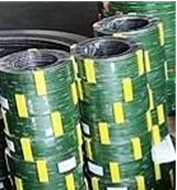
Traditional plastic spacers are widely used to protect the delicate graphite sealing surfaces of spiral wound gaskets during storage and transport. While effective, they are typically single-use items and contribute unnecessarily to plastic waste.
ESA launched a dedicated initiative to rethink this component and identify sustainable alternatives that align with circular economy principles and evolving environmental expectations across the sealing industry.

Biodegradable SWG spacers with VED Italy
This solution focuses on fully biodegradable spacers specifically engineered for spiral wound gaskets. 

This project was developed in collaboration with VED, an Italian materials engineering company and active ESA member with strong expertise in biodegradable biocomposites derived from organic sources.
Together, ESA and VED evaluated advanced biodegradable polymers, including:
- PLA (Polylactic Acid)
- ZPHA (Polyhydroxyalkanoates)
Both materials are capable of breaking down into water, carbon dioxide, and biomass under appropriate conditions, offering a sustainable alternative to traditional plastics while maintaining functional integrity.
This project has been successfully finalised, and a detailed specification sheet, including technical data and VED contact details, is now available for companies interested in individual implementation.
Circular biocomposite spacers
The ESA is collaborating with BIOPLASMAR GmbH, a materials engineering company specialising in biodegradable biocomposites made from organic green waste.
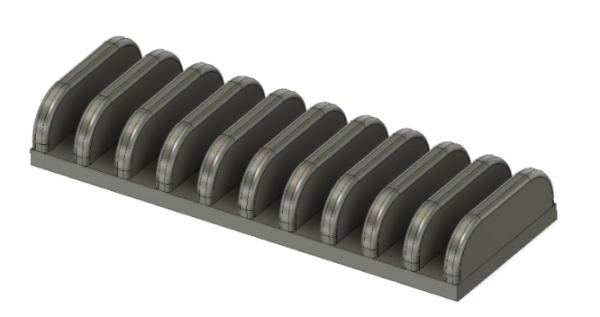
This solution exemplifies the circular economy in practice – transforming waste streams into high-performance materials capable of replacing conventional plastics. BIOPLASMAR’s biocomposites are already successfully applied across multiple industries, including horticulture, agriculture, construction, food, and packaging, demonstrating their robustness and scalability.
Key benefits
- Made from renewable organic waste
- Biodegradable and circular by design
- Suitable for industrial applications
This project has been finalised, and a specification sheet based on the data provided by the manufacturers and contact details is now available for an individual approach when desired.
Sustainable alternative for LDPE stretch foil
Sustainable industrial stretch film
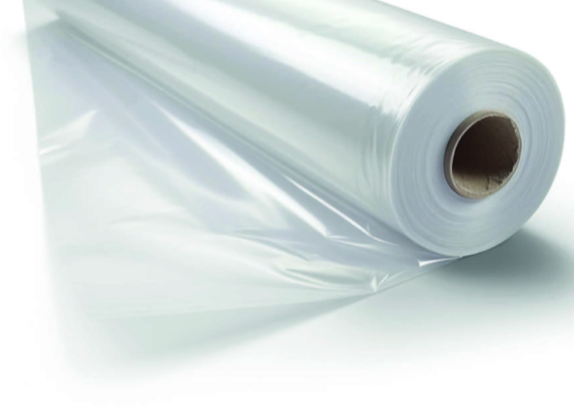
We are proud to highlight an exciting new step forward in eco-innovation – the development of biodegradable stretch foil for packaging purposes.
At Biowrap, they produce 100% biodegradable and compostable films and solutions, thus contributing to the reduction of plastic pollution and CO2 emissions. Raw materials do not emit harmful gases during production and are therefore non-polluting with an almost zero environmental impact. Compostable films will help the planet reduce greenhouse gases (responsible for global warming of the planet) and post-consumer waste (global/ocean pollution).
The “Biowrap Stretch” is a highly transparent 100% bio-compostable film (barcode reading through the film without difficulty) with good tensile strength and stretchability suitable for manual use or on automatic machines, suitable for all kinds of wrapping machines (up to 200% in mechanical brake).
These biodegradable materials break down at least 90% within 6 months in an industrial composting facility or a home composting setup. However, the exact duration of the process depends on the waste type, thickness and the type of composting facility.
Specification sheets based on the data provided by Biowrap and contact details are now available for an individual approach when desired.

Sustainable wax-coated boxes for braided packings
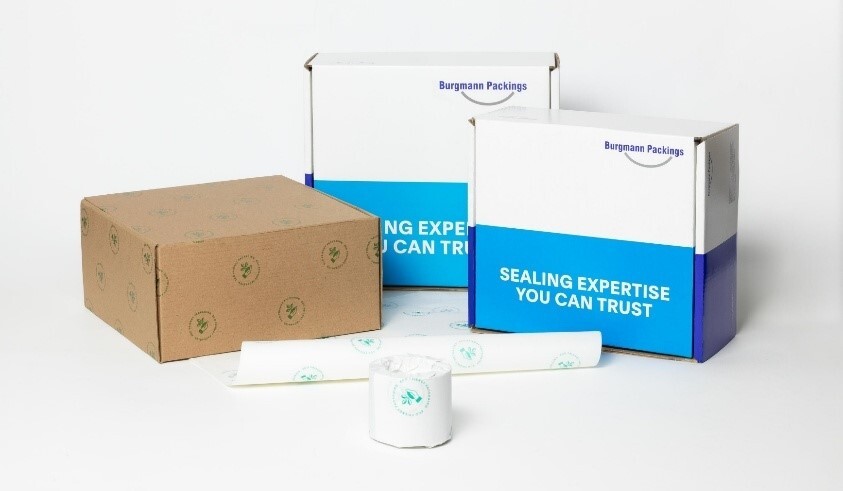
A few years ago, Burgmann Packings introduced a sustainable packaging concept for braided packings. The objective was to replace the stretch film traditionally wrapped around the packing with an alternative, more environmentally friendly solution.
Initial trials using a white stretchable tape to wrap the braided packings – intended to prevent the migration of oil or grease – were not successful. As a result, Burgmann Packings decided to return to the original concept, utilising a wax-coated inner box to protect the braided packing, which is then placed inside the standard outer box.
The packing is wound onto a cardboard creel and wrapped with standard paper, completely eliminating the use of metal and plastic materials.
For further information, please contact our member Burgmann Packings.