
As part of the upcoming SEAC (Socio-Economic Analysis Committee) public consultation on PFAS scheduled for March 2026, ESA is preparing to coordinate a consolidated industry response.
Unlike the 14 specific sectors that have already undergone detailed assessment, the additional eight sectors—including sealing applications—will be addressed differently. For these sectors, SEAC will request general information rather than sector-specific data.
It is important to note that the Q&A survey will have strict limitations on text length, and attachments or data files will not be accepted. To guide stakeholders through this process, ECHA hosted an online information session on 30 October 2025 and will publish consultation guidelines explaining how to submit relevant and usable information.
ESA’s Approach
Following ECHA’s guidelines, ESA intends to begin its preparation well in advance to ensure our industry’s voice is clearly represented. To strengthen ESA’s position and increase the credibility and impact of our submission, we urge all ESA members to contribute new, clear, factual and concise information—particularly insights different from those submitted during the first ECHA public consultation in 2023.
ESA will also share relevant updates and case studies through the dedicated PFAS Information Hub.
We are particularly interested in:
- Case studies where PFAS-free alternatives are unavailable or inadequate.
- Socio-economic impact data, including potential costs, operational risks, or loss of performance resulting from restrictions or lack of derogations.
- Technical evidence supporting the unique properties and necessity of fluoropolymer-based sealing materials.
Your input will help ESA build a robust, evidence-based response that accurately reflects the real-world implications for our sector.
Example Case Study: Engine Seals


A recent study by Fraunhofer provides an excellent example illustrating the challenges in replacing fluoropolymers. 
Fluoropolymer-based seals are essential in applications where long operational lifetimes and reliability are critical—such as in large diesel engines (ships, power generators) or wind turbines.
- Ship engines typically undergo major maintenance every five years, and replacing seals prematurely would significantly increase costs and downtime.
- In power generation for isolated communities, seal longevity is crucial to maintaining uninterrupted supply.
- In wind turbines, replacement can be complex, expensive, and sometimes infeasible.
PFAS-free alternatives generally fail much earlier under these demanding conditions. Fluoropolymer seals can operate for up to 40,000 hours without failure, far exceeding non-fluorinated options.
Research Findings – Noordermeer and Masen
Their analysis on replacing PFAS-based elastomeric rotary propeller seals in marine transport outlines the stringent performance criteria required:
- Continuous operation at temperatures ≥130 °C for at least 5 years
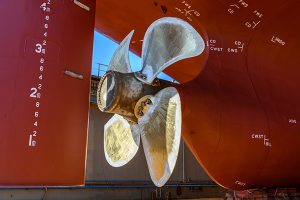
- Resistance to oil and (salt)water without swelling
- High mechanical strength, abrasion and fatigue resistance
- Stability across a wide temperature range down to ≤5 °C in marine applications
Current PFAS-free alternatives (e.g., NBR, HNBR, ACM, CR) do not meet these combined requirements. The researchers conclude:
“Experiences over the past decades show that no alternatives exist that match the combination of characteristics required to substitute FKM. Replacing FKM in propeller shaft seals is practically not realistic and will require at least many years of research.”
Source: Replacement of Polymeric PFAS in Industrial Applications with Harsh Environments, IWM Report 1191/2024.
Why Your Feedback Matters
Your expertise and data are vital to ensuring that SEAC and ECHA fully understand the technical realities and socio-economic implications of potential PFAS restrictions.
By combining the collective knowledge and experience of ESA members, we can:
- Present credible, evidence-based arguments for necessary derogations.
- Demonstrate the critical role of fluoropolymers in maintaining Europe’s industrial resilience and innovation capacity.
- Highlight the unintended consequences of restrictions on essential applications, helping regulators make balanced decisions.
Next Steps
We kindly ask all members to share relevant information or case studies by email to
sandy.vandenbroeck@europeansealing.com
Your proactive participation will enable ESA to represent our sector effectively and ensure that the SEAC consultation process reflects the true technical and economic realities of sealing applications.
For resources, technical references, and updates on PFAS regulatory developments, visit ESA’s PFAS Information Hub.
Together, we can ensure our industry’s expertise shapes the decisions that impact its future.
Sandy Van den Broeck,
ESG Director, ESA