The consultation launched by the Committee for Socio-Economic Analysis (SEAC) represents a critical phase, particularly for industries such as sealing applications that rely heavily on fluoropolymers based on long chain molecules which are non-toxic, non-bioaccumulative, non-hazardous for humans or the environment.
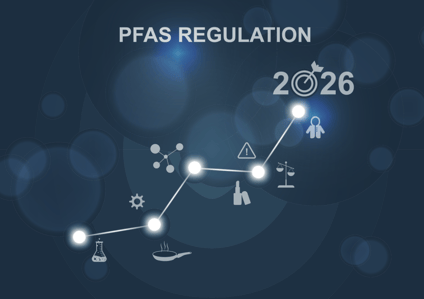
The PFAS restriction process
PFAS are widely used due to their durability, chemical resistance, and thermal stability. However, concerns over their persistence, mobility, and toxicity have led regulators to consider a broad restriction covering manufacturing, market placement, and use across multiple sectors.
The restriction proposal considers three main regulatory options:
- RO1: Full ban
- RO2: Ban with time-limited derogations 12-year derogation for sealing applications
- RO3: Continued use under strict conditions
Sealing applications – although critical – were not among the initially assessed sectors and are now part of additional sectors requiring further evaluation.
Why sealing applications matter
Fluoropolymers such as PTFE, FEP, and PFA are essential in sealing technologies due to their: high temperature resistance, chemical inertness, long service life and ultra-low contamination properties.
These characteristics make them indispensable not only in sectors like energy, chemicals, semiconductors, and aerospace, but basically in ALL industrial sectors. Importantly, studies indicate that substitutes often fail to meet these performance requirements, making replacement technically challenging or infeasible.
The SEAC draft opinion consultation
Key features
SEAC launched its consultation on 26 March 2026, with a 60-day window closing on 25 May 2026.
The consultation has several distinctive features:
- Requires EU Login registration
- Conducted via an online survey (EUSurvey platform)
- No attachments allowed
- Responses limited to 500–5000 characters depending on the question
- Focus on socio-economic impacts and availability of alternatives
Unlike the earlier Annex XV consultation, this phase is more structured and restrictive in format, limiting the depth of technical evidence that stakeholders can submit.
A critical limitation: Lack of sector-specific assessment
A key concern for the sealing industry is that:
- Eight additional sectors, including sealing applications, were not subject to detailed sector-specific evaluation.
- The SEAC consultation relies on generalised questions.
This creates a risk that the unique functional requirements and constraints of sealing applications may not be fully captured in the socio-economic analysis.
What SEAC is looking for
The consultation aims to gather targeted input on:
- Economic impact of restrictions
- Technical feasibility of alternatives
- Time needed for substitution
- Consequences of supply disruption
For sealing applications, this means stakeholders must clearly demonstrate:
- Where fluoropolymers are irreplaceable
- The risks associated with substitution
- The broader industrial consequences of restrictions
Industry stakes: Economic and strategic impact*
The potential implications of PFAS restriction are substantial:
- €560 billion in first-year costs under restrictive scenarios
- €70+ billion in recurring annual costs
- Impact on 39,000 enterprises and ~2.9 million jobs
Sealing applications are deeply embedded in critical value chains, including clean energy, transport, and advanced manufacturing. Disruptions in sealing performance could cascade across these sectors.
ESA’s role and strategy in the SEAC consultation
The European Sealing Association (ESA) is actively coordinating industry input. Its actions include:
- Preparing a structured response to the SEAC survey
- Sharing Q&A guidance with members
- Encouraging downstream users to participate
- Collaborating with other industry associations
- Developing a position paper on sealing applications
This coordinated approach is essential given the limitations of the consultation format.
The SEAC consultation presents several challenges:
- Character limits and lack of attachments constrain the ability to provide detailed technical evidence.
- Generalised questions may not reflect the complexity of sealing applications.
- Without prior sector-specific assessment, sealing applications risk being undervalued in decision-making.
Active and well-structured participation is therefore critical.
Conclusion
The SEAC consultation represents a critical stage in the PFAS restriction process. For the sealing industry, the stakes are especially high given the essential role of fluoropolymers, the current lack of viable alternatives, and the potential impact on the European economy.
At ESA, our objective is to secure an exemption for fluoropolymers.
Sandy Van den Broeck,
ESG Director, ESA
*Source: Richards, R., White, R., Stenning R., 2025, The Per- and polyfluoroalkyl substances (PFAS) and their role as enablers in the competitiveness of European industry: Inception Report, publication for the Committee on Industry, Research and Energy (ITRE), Policy Department for Transformation, Innovation and Health, European Parliament, Luxembourg.
This document is available at: http://www.europarl.europa.eu/supporting-analyses.